POWERING THE FIGHT
LESSONS FROM THE GRID AT WAR
The Big Picture
The U.S. military’s relationship with the power grid has evolved considerably during the past century.
The U.S. government stepped up to work with industry in World War I and World War II to overcome energy shortages that threatened the war effort. The experiences with power system planning and buildout from these conflicts are relevant today in peacetime.
Why It Matters
The power grid is vital to a globally-networked U.S. military. If the U.S. had to fight a major war today, the power grid would immediately be tapped to deliver uninterrupted electricity for critical missions at domestic military installations, while simultaneously supporting wartime manufacturing. The U.S. is currently experiencing unprecedented growth in civilian power demand, which is already testing the limits of our grid.
The Way Ahead
Drawing on lessons from last century’s major wars — “Powering the Fight Lessons from the Grid at War” by Converge Strategies — identifies a path forward for policymakers, defense leaders, utilities, and grid operators to strengthen the power grid.
“The two world wars of the twentieth century proved how central the electric grid was to total victory. It will be even more essential if the United States has to fight a major war in the future.
The question is whether the grid will be ready to meet the demands of the modern military and the energy-intensive technologies we need to overmatch our adversaries in the terrestrial, space, and digital domains—or learn the hard way what happens when it’s not.”
— Will Rogers, Principal, Converge Strategies
Part One. The Grid, The Industrial Base, and Major War
Considers the U.S. military’s early relationship with the grid and the role electricity played in the mobilization of the defense industrial base during the two world wars of the twentieth century. It discusses the challenges the power grid faced meeting the total war requirements put on the defense industrial base, and what steps the United States took to overcome these challenges before they caused irreversible harm to the war effort.
Part Two. Domestic Installations and Shifting Dependence on the U.S. Electric Grid
Examines the evolution of U.S. domestic installations and their increasing dependence on the power grid. Noting the fundamental change in the nature of the U.S. military and its globally networked forces tied to domestic bases, this section emphasizes the military’s increasing dependence on a vulnerable and aging U.S. power grid. The section concludes by using the lessons from the last major wars to infer what might happen if the United States had to fight a major war today while relying on the current electric grid.
Part Three. Lessons Learned and The Way Ahead
Outlines important steps that policy makers, defense leaders, utility owners, and grid operators should consider today to begin to build an electric grid that will help the U.S. military succeed in the future, including:
Prioritize interregional transmission to redirect surplus power to areas of the nation experiencing shortfalls.
Foster interagency collaboration for coordinated engagement across critical defense and energy agencies.
Emphasize defense critical electric infrastructure as the focal point for the Department of Energy and U.S. military engagement with grid planners.
Strengthen public-private financing for transmission expansion by enlisting financial instruments to derisk investment and reduce ratepayer burden.
Support a flexible, efficient, and lean grid through federal investment in innovative grid technologies to maximize current infrastructure.
Build defense installation loads into grid planning to ensure utilities and grid operators have sufficient capacity for defense needs.
Each report tackles one piece of a shared challenge.
Select a report to explore its findings and download the full publication.
-
![Powering Growth and Affordability The Role of Transmission in Economic and National Security]()
Powering Growth and Affordability The Role of Transmission in Economic and National Security
How interregional transmission will boost the economy and help the grid meet surging energy demand.
-
![Cover of the March 2025 report “Unleashing the Grid: Energy Dominance for National Defense,” featuring U.S. Marines in camouflage with rifles and power lines in the background.]()
Unleashing the Grid: Energy Dominance for National Defense
A framework for defense stakeholders to understand electric grid risks and explore opportunities where defense input could strengthen and expand the electric grid.
-
![Unleashing Virginia: Strengthening The Commonwealth's Transmission System For National Defense]()
Unleashing Virginia: Strengthening The Commonwealth's Transmission System For National Defense
Provides a shared foundation to catalyze coordination between Virginia’s defense, energy, and economic development stakeholders.
-
![Powering the Fight Lessons from the Grid at War]()
Powering the Fight Lessons from the Grid at War
Identifies a path forward for policymakers, defense leaders, utilities, and grid operators to strengthen the power grid.
-
![Transmission Expansion For National Defense (TREND)]()
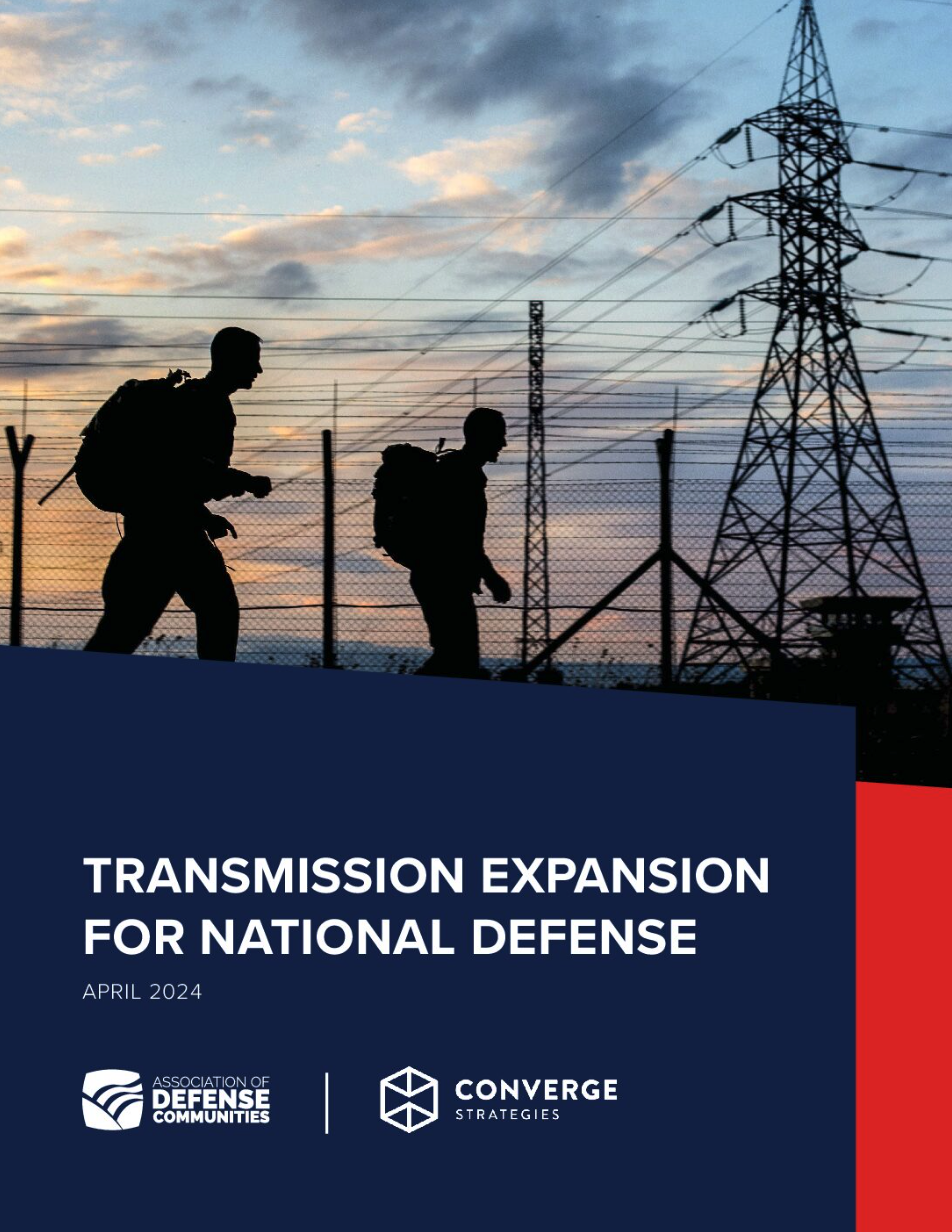
Transmission Expansion For National Defense (TREND)
Presents concepts for aligning transmission grid investment with national defense.